
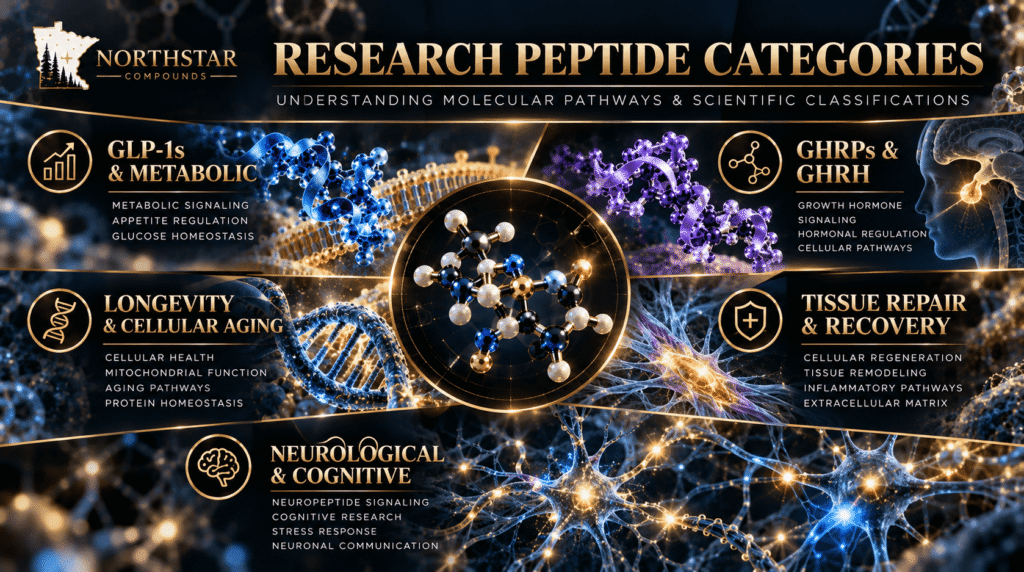
Understanding Research Peptide Categories: GLP-1s, GHRPs, Longevity & Recovery
Explore GLP-1, GHRP, GHRH, longevity, and tissue repair peptide research, including molecular pathways and laboratory investigations.
Educational resources covering peptide science, analytical testing, laboratory quality standards, and research methodologies.
Explore GLP-1, GHRP, GHRH, longevity, and tissue repair peptide research, including molecular pathways and laboratory investigations.
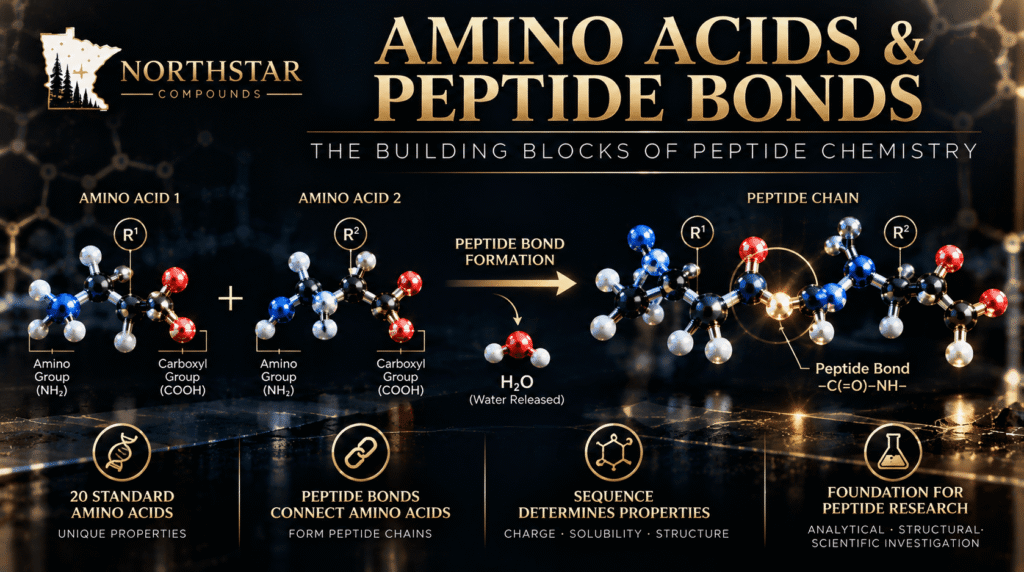
Explore amino acid structures, peptide bond formation, and how molecular sequences influence peptide chemistry and laboratory research.
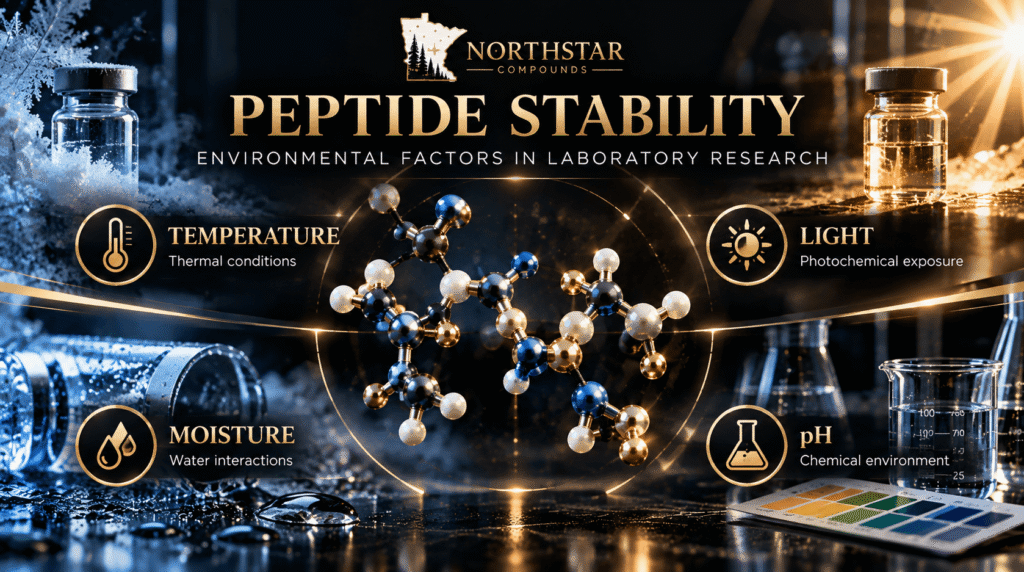
Explore how temperature, light, moisture, pH, and molecular structure influence peptide stability in scientific laboratory research.
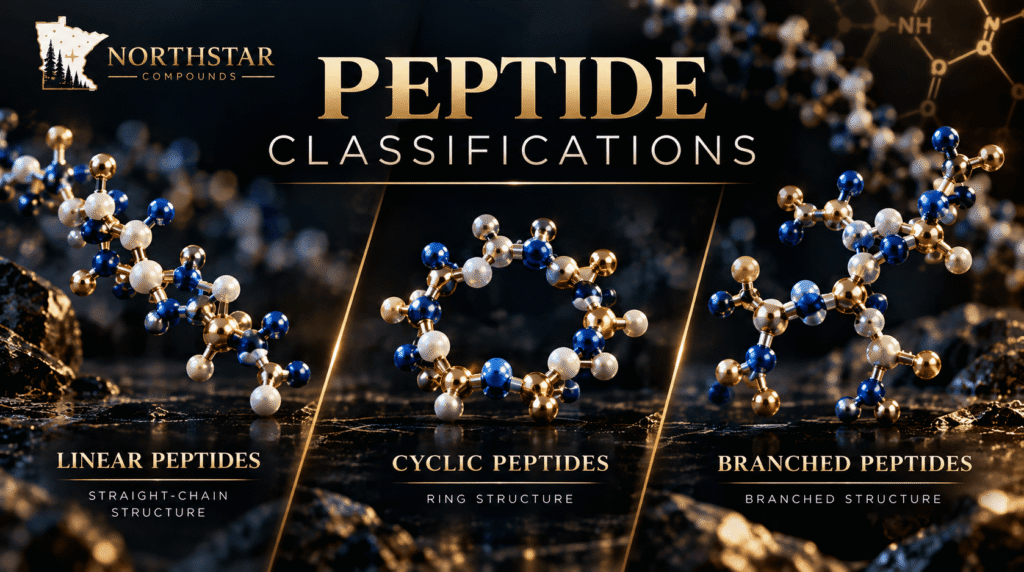
Explore how peptides are classified by amino acid chain length, molecular structure, chemical modifications, and scientific research characteristics.
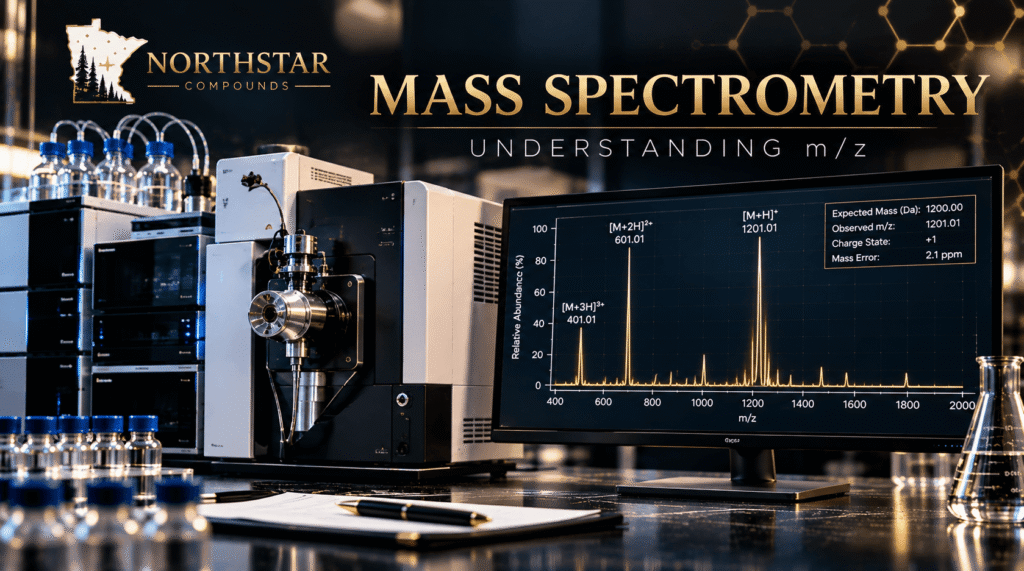
Learn how mass spectrometry identifies research peptides, what observed m/z means, and how to interpret molecular mass results on a COA.
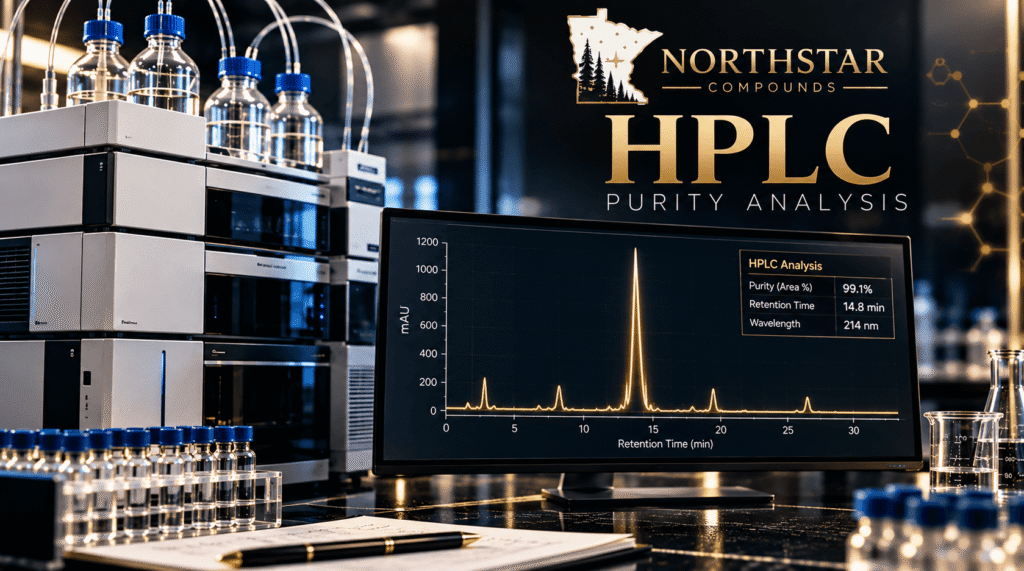
Learn how HPLC works, how laboratories interpret chromatograms, and what peptide purity percentages actually mean.
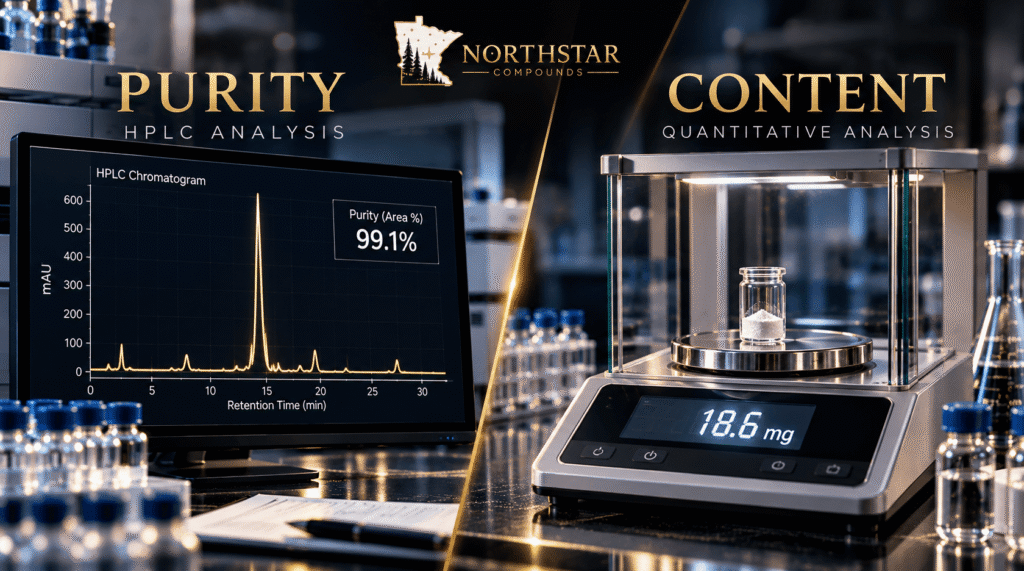
Learn the difference between peptide purity and actual content, how laboratories measure each, and why these results matter when interpreting COAs.
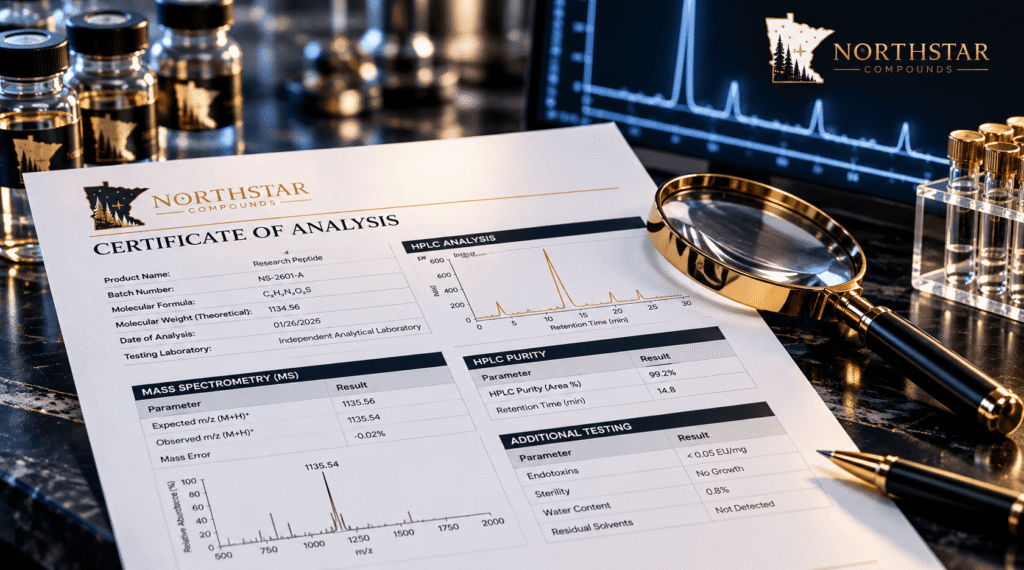
Learn how to interpret peptide certificates of analysis, including purity, molecular mass, batch numbers, and laboratory testing methods.
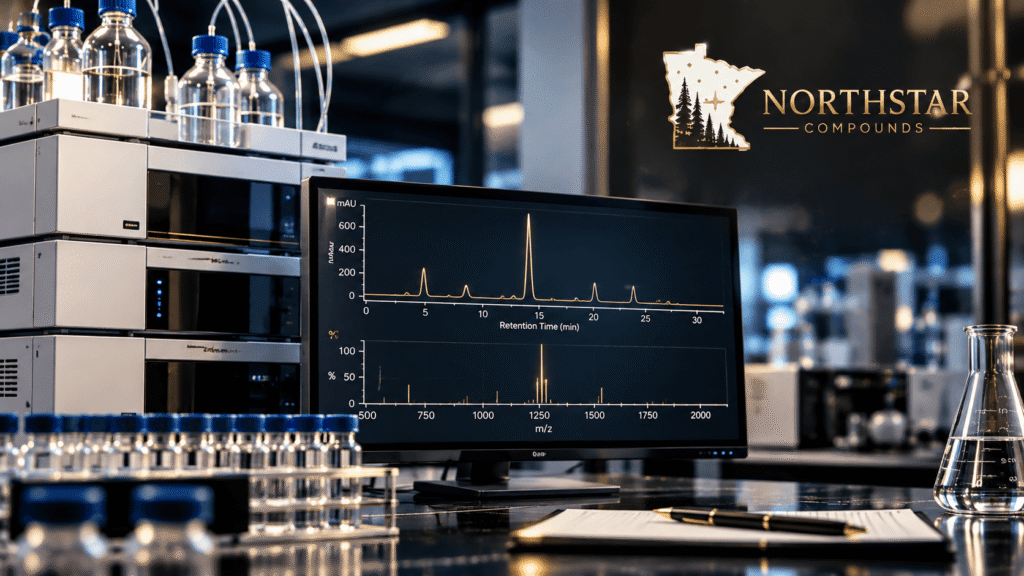
Learn how independent laboratories analyze research peptides using HPLC, mass spectrometry, and documented quality testing.
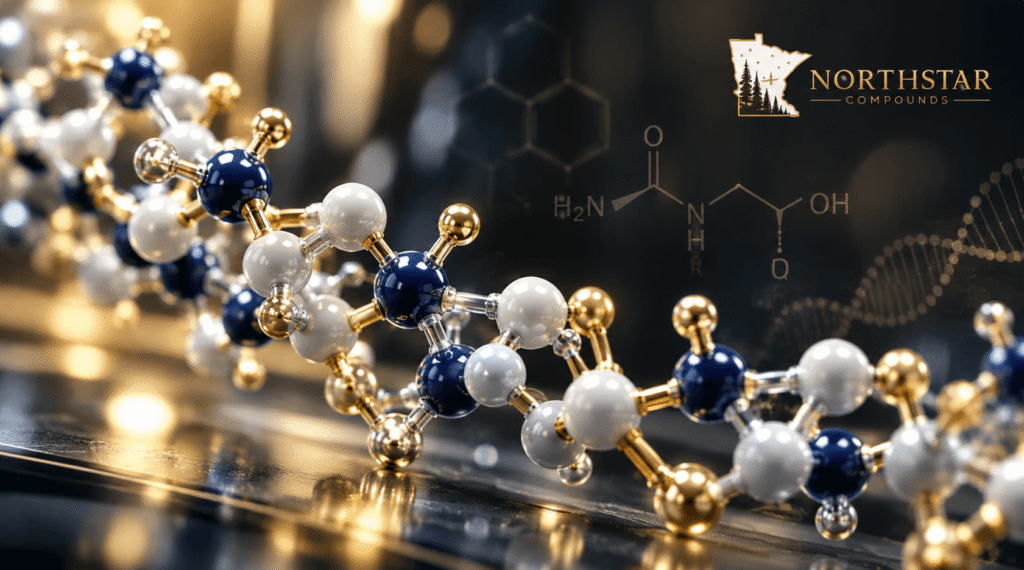
An introduction to peptide chemistry, amino acids, peptide bonds, molecular structure, and the scientific principles behind laboratory peptide research.